Showing posts with label award winner. Show all posts

Monday, February 24, 2014

Book review: "Navigating Early" by Clare Vanderpool

Title: Navigating Early
Author: Clare Vanderpool
Publisher: Delacorte Press, 2013

After his mother dies suddenly, Jack Baker is sent to a boy's boarding school in Maine, far from his home in Kansas, his distant father who has just returned from the warfront, and all of his memories of life before. He doesn't feel at home at Morton Hill Academy and tries to fit in with mixed results until he meets Early Auden, "that strangest of boys." It becomes clear that Early's brain works differently than most people's, and this eventually leads both boys on an adventure in the Maine wilderness, up the Appalachian trail in search of something. Whether it's the end of the story of the number pi, the great Appalachian black bear, or something a little less attainable, Jack and Early go and seek it out.

I enjoyed this 2014 Printz Honor title much more than I thought I would. It is a grand adventure, with pretty real danger, a fully human cast of characters (with perhaps the exception of the bear and dear old Bucky the frog), and grief in many forms. I think every character deals with some sort of grief, and each processes it in a different way.

I'm not sure I completely liked the parallel of Early's story of Pi, who is a character with his own tale, and Early and Jack's story. There was just a bit too much suspension of disbelief that these two stories so closely mirrored each other, mostly with the Ancient One part. It just felt off to me. But it's a small quibble, because in the end everything comes together beautifully, with some nice twists and turns in the journey, much like the Appalachian Trail itself.

Take a look at this book if you like a tale within a tale, reading about the Maine wilderness, mystery, quests, or a good old-fashioned adventure story.

Disclaimer: I received a free galley of this book from the publisher... a year ago. Sorry it took so long!

Monday, January 27, 2014

YOUTH MEDIA AWARDS 2014 ANNOUNCED!!!

Baaaahhhhhh I'm SO EXCITED!!! The Youth Media Awards were just announced this morning and I can't wait to dig in to the winners!

I'm super, super excited because I have most of the Printz AND Newbery honor books in my library's collection, PLUS I got the Printz winner too!

Here are the big winners. See the complete list here.

Michael L. Printz Award (excellent in literature written for young adults)
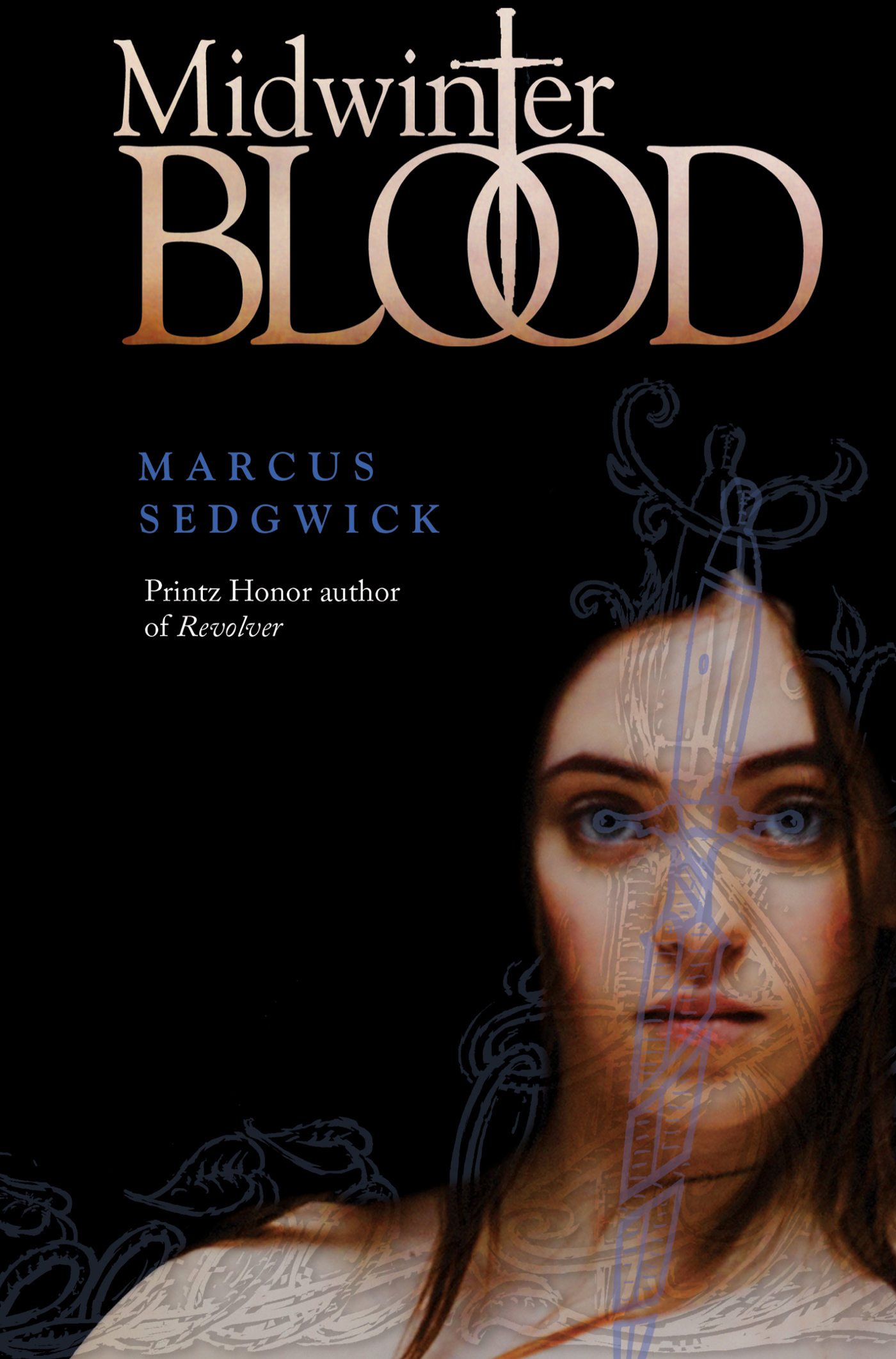
Winner: Midwinterblood by Marcus Sedgwick
Honors: Kingdom of Little Wounds by Susann Cokal, Maggot Moon by Sally Gardner, Eleanor & Park by Rainbow Rowell, and Navigating Early by Clare Vanderpool

John Newbery Medal (most outstanding contribution to children's literature)
Winner: Flora & Ulysses by Kate DiCamillo
Honors: Doll Bones by Holly Black, The Year of Billy Miller by Kevin Henkes, One Came Back by Amy Timberlake, Paperboy by Vince Vawter


Randolph Caldecott Medal (most distinguished American picture book for children)
Winner: Locomotive by Brian Floca
Honors: Journey by Aaron Becker, Flora and the Flamingo by Molly Idle, Mr. Wuffles! by David Wiesner

William C. Morris Award (debut book written by a first-time author writing for teens)
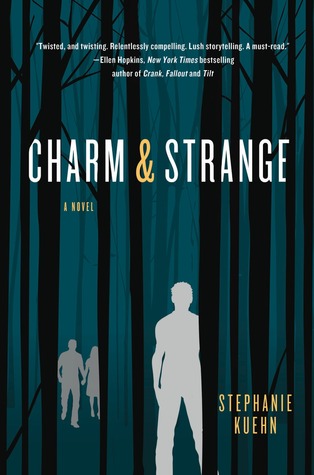
Winner: Charm & Strange by Stephanie Kuehn
Finalists: Sex & Violence by Carrie Mesrobian, Dr. Bird's Advice for Sad Poets by Evan Roskos, Belle Epoque by Elizabeth Ross, In the Shadow of Blackbirds by Cat Winters

So this year I am going to make a concentrated effort to read as many of the Printz and Morris titles as I can. I will also attempt to read books that end up on the rest of the YALSA lists, which will be announced in the coming week or so, I think. I will also do my very very best to review them here! I promise I am going to try to post more often, and this is a perfect opportunity.

Were you surprised by any of the winners? How many have you read?

Thursday, February 21, 2013

Book review: 2013 Printz Award Winner "In Darkness" by Nick Lake

Title: In Darkness
Author: Nick Lake
Publisher: Bloomsbury USA Children's, 2012 

In this powerful story, we learn how circumstances can shape who a person becomes. This is the story of a teenage gang member stuck under the rubble after the Haiti earthquake in 2010 told in tandem with the story of Toussaint L'Ouvreture, the man that freed Haiti's slaves. Shorty, a 15-year-old gangster in the most dangerous part of Haiti, finds himself trapped beneath tons of rubble after the earthquake of 2010, with nothing but darkness and death surrounding him. He begins to tell us, who he calls the "voices in the darkness," his history. We also read, through third-person narration, the story of the slave Toussaint, who led his people to freedom and their own government.

It is clear why this was the winner of the 2013 Printz Award. The story is compelling, both of them together; Shorty has grown up in terrible poverty, surrounded by gang violence and political unrest. He has seen family members, friends, and neighbors killed, to the point where it is almost normal. And so, he falls in with the gang of his neighborhood, because he believes that way he will get his abducted sister back and get his revenge.

Meanwhile, we're learning how Toussaint was successful in some things, but not in others. It's history, so it's not a spoiler, but we are living the revolution along with him. What really made this fictionalized history stand out was Toussaint's spirit connection with Shorty and the Haiti of 2010. In visions, he sees Haiti through Shorty's eyes, and knows what he dreams is possible, though perhaps not as peaceful as he hopes.

The writing is superb, though it helps if you know a little bit of French or Creole. There is a lot of vernacular throughout Shorty's sections, and you can see what most of it means in the context of how it's used, but it makes for a more challenging reading experience.

What really got me with this title is the characters. It was hard to read about how violent they all are, and the evil acts they all do, but I have to say Lake wrote them in such a way that I understood why they became what they did, and still see their humanity. I could see why Shorty fell in with the Route 9 gangsters. There was one scene I couldn't stop thinking about where Biggie talks to his mother on the phone, and I cried.

If you're up for the challenge of the dark content and the difficult language, this is a book not to be missed.

Disclosure: I got this book from the library.

Thursday, July 7, 2011

Review: "Elijah of Buxton" by Christopher Paul Curtis

Title: Elijah of Buxton
Author: Christopher Paul Curtis
Publisher: Listening Library, 2008 (print from Scholastic, 2007)
Narrator: Mirron Willis

Elijah was born free in Canada, in a settlement called Buxton. His parents escaped slavery in America, making it to the security and relatively happy life—and Elijah was the first baby to be born in this new country, away from the shackles America would have placed on him and his family. But life isn't perfect for the people of this community. Many still have family members who didn't make it to Canada, others have lost family to death, and most still bear the scars, both physical and psychological, of slavery.

Elijah lives in relative peace and security because of his ignorance of the way it is in America, but when one of his neighbors is robbed of the money he was going to use to free his family, Elijah makes a dangerous journey down south, past the Canadian border. He sees horrors he hopes to never see again, if only he can make it back home.

I first read Christopher Paul Curtis last summer for my children's literature class, and I've been meaning to read more of his work ever since. His books, though they have roots in racism and slavery in America, also tell incredibly engaging stories full of humor. In this Newbery Honor–winning book, also the recipient of the Coretta Scott King Book Award, Curtis does an incredible balancing act, pacing the drama and danger with the more lighthearted parts of the story, and does not shy away from the horror to which slaves were subjected. Elijah of Buxton is a funny and alternately searing account of life during the mid-1800s for black people in both America and Canada. Vile characters interact with good-hearted ones, and men with good intentions make bad decisions. I couldn't often couldn't stop listening, even after I had reached my destination in my car.

Curtis also includes an excellent author's note at the end, giving a brief history of Buxton and what in his novel was real and what he fictionalized (which should always be included in a work of historical fiction). As a bonus, Curtis reads this himself in the audio.

Mirron Willis's narration was perfect. He read the dialect with authenticity and just the right amount of emotion, portraying Elijah's confusion, naivete and conviction with all the charm Curtis gives Elijah. I fell in love with Elijah through Willis's voice and excellent portrayal.

If you're looking for a way to while away the hours of your morning and/or evening commute or on a long road trip (especially with kids who have the patience to listen to audiobooks), I highly recommend this one to keep you company.

Disclosure: I got this from my local library.

Tuesday, May 31, 2011

Review: "When You Reach Me" by Rebecca Stead

Title: When You Reach Me
Author: Rebecca Stead
Publisher: Yearling (Imprint of Random House), 2009

Miranda, sixth-grader and native New Yorker, knows how to live in the city, especially since her mom has been telling her how to be safe for pretty much her whole life. She deals with the older boys who hang out near her apartment building, the crazy man on the corner who kicks at the street and lies with his head under a mailbox, and she knows to keep her key out at least a block before she gets to her door. But her constant companion, her best friend Sal, starts acting really weird; after he gets punched by one of the kids on the street for no reason, he stops talking to her and walking home with her and basically just ignores her. She's not sure why or what she did, or how to get him back.

This is all made way more complicated and frightening when she starts getting the notes. The notes that tell her pieces of the future. And the notes that tell her she needs to help the note-writer before it's too late and a person close to her dies.

When You Reach Me has stayed with me long after I finished the last page. It's a fast read, but it's also one that I will probably revisit again soon. There is a gentleness to Stead's writing, a mystery just out of reach that only comes together when it should. I did guess at things, but I often found myself second-guessing and turning to pages to see if I was right or not.

And let me tell you, that ending is beautiful.

I also need to tell you all that, if you have read and liked (or loved—better if you love it, as I do) A Wrinkle in Time by Madeleine L'Engle, you need to read this book. Miranda loves it to the point where she's read it too many times to count and her copy is falling apart. She calls it her book, and I think any reader knows what she means. It's the book that means the most to her, the one she carries with her always (be it figuratively or literally).

Miranda isn't perfect.. She has a mean streak if the mood strikes, if she's jealous of someone. And she doesn't always make the best decisions. But she is all the more real for it, even if we don't want her to do what she chooses to do.

Oh, and the story takes place during 1978-9, giving it a slightly different feel. It's a New York of a different time, but not so different. There is just a dash of science fiction, but it's nothing that takes you out of the real setting or out of Miranda's day-to-day experiences.

I truly loved this book and wholeheartedly recommend it to those who enjoy books about time travel, friendship, A Wrinkle in Time, and possibly game shows.

Disclosure: I purchased a copy of this book from Barnes & Noble.

Monday, January 24, 2011

Review: "Mockingbird" by Kathryn Erskine

Title: Mockingbird
Author: Kathryn Erskine
Publisher: Philomel Books, 2010
Where I got it: I requested it from the library.

*Starred Review*


As someone who has Asperger's, 10-year-old Caitlin has trouble understanding why people act a certain way and how to react to them in turn. She would always turn to her older brother Devon to explain things and situations for her, but Devon dies in a tragedy that rocks their entire community. So not only is Caitlin left without her most trusted friend and big brother, she must learn how to deal with the way her father is now acting, the way others treat her in school, learning empathy, and most important of all, getting to Closure.

If you haven't heard of this book yet, just to tell you, it won the National Book Award for young people's literature. And let me tell you, it certainly deserved it. Through Erskine's book we see the world through Caitlin's eyes and mind. She doesn't Get It (as she would say) most of the time, as she can't understand certain emotions or reactions. She has to work really hard to see how another person is feeling and how to make them feel better, instead of worse. It's very illuminating to see how a person with Asperger's might view the world, and gives us a tool to understand them better and the way they see things better.

Despite her lack of understanding others, Caitlin is remarkably intelligent and an incredible artist. Throughout the book, Erskine uses Caitlin's artistic talents as a device—her refusal to use color goes hand in hand with the way she likes to see the world. Black and white are much easier to deal with than colors that can run together and blur. But as she begins to learn empathy and friendship, as she begins to find the ever-illusive Closure, Caitlin begins to see that color might be useful.

What really struck me about this novel was the rawness and realness of everything. Erskine does not really censor much, but not in an inappropriate way. What I mean is, Caitlin just reports things as she sees them, bluntly and accurately—this is especially true when she describe her father's violent reaction when he hears the news of his son's death and his subsequent grieving (mostly detachment, refusal to speak of Devon, and lots of crying),  and how she herself is dealing with the loss of the only person who seemed to understand how to talk to her. We also see things that Caitlin misses. She has incredible skills of observation, and doesn't shy away from telling us everything—actions and gestures that she doesn't understand are not lost on us, and I felt it all the more.

We also see the way a tragedy can affect everyone involved, even those who are related to the ones who caused it. It's heartbreaking, but the quest for Closure is a bold and valiant one that Caitlin tries to share with the entire community.

The mockingbird title comes from Devon and Caitlin's shared love for the movie To Kill a Mockingbird. Throughout, Caitlin keeps returning to this, to her nickname Scout that Devon gave her, and to all of their likeness to the three main characters in the film and book (Jem, Scout and Atticus). In the end, Devon is the symbolic mockingbird—dead despite his innocence, but living on in the memory of his family and of his community.

Incredibly moving and poignant (I use that word not as a cliche; I mean it with all my heart), Caitlin shows us a world that we mostly try to ignore. She shows us ways to deal with grief, both good and bad, but all real; after death and tragedy, we must find our way to Closure, and to living again.

Wednesday, December 8, 2010

Review: "How I Live Now" by Meg Rosoff

Title: How I Live Now
Author: Meg Rosoff
Publisher: Wendy Lamb Books, 2004
Where I got it: Took it out of the library.

15-year-old American-born Daisy is shipped off to stay with her aunt and cousins on their farm in England, when war breaks out. All is changed forever—Aunt Penn left for Oslo a few days before The Occupation, and Daisy and her four cousins are left alone to fend for themselves. In the beginning, it's wonderful—especially when Daisy and her cousin Edmond find they feel more for each other than just cousinly love. But they are soon forced to remember that they are living in the middle of a war, and paradise can't last forever.

I've heard others say this book is not so much about the war as it is about Daisy and her relationships. I'm going to have to disagree; this is unequivocally a war story, albeit one that heavily relies on the relationships between Daisy and her cousins, especially Edmond. The Enemy is never named, and we never find out who invaded, who is bombing, or who the foreigners are, making it that much scarier; it is deliberately left ambiguous. Life is not pretty when people around the country are dying, often violently, and despite the early days of ignorance for these five children, they learn this fast and the hard way.

At first the run-on style of Daisy's narration kind of bugged me, but as the story went on it started to fit really well with the events. Her rush to get the words out just worked with the events, though it did work much better once the war got into full swing. When she was just with her cousins it seemed out of place.

Another thing other people mentioned was the relationship between Daisy and Edmond, and how it didn't seem so strange, even if they are first cousins. I have to say, I couldn't quite forget all about it, and it did bother me a little, but not enough to stop reading the book. It would be a shame to put this one down because of that. The descriptions of war and how Daisy and her cousins managed to live through it are the real reason to read this. And yet, despite the triumph of surviving, it is quite a dark book with a somewhat problematic (though hopeful) ending.

This is another Printz Award-winner, and I have to say I like this one better than The White Darkness. The story kept me reading late into the night, and once I got past the beginning it was hard to put down. Rosoff gives us a horrific and graphic look at war from the perspective of a younger and reluctant participant, a girl who started off apathetic about the whole situation and is quickly forced to see that it does matter, even if you don't think it can touch you.

Did this deserve a Printz? I'd say probably. It is very well-written and is pretty powerful, not to mention does not shy away from gore or sexuality and has a pretty riveting plot. I liked it well enough, though I'm not sure it will stay with me for very long. I'll remember it for sure, but it won't be something I find myself deeply contemplating.

This reminded me of Susan Beth Pfeffer's Life As We Knew It, though I liked Pfeffer's book better. If you liked How I Live Now, you might want to consider taking a look at Pfeffer's trilogy.

Tuesday, October 26, 2010

Review: "The White Darkness" by Geraldine McCaughrean

The White DarknessTitle: The White Darkness
Author: Geraldine McCaughrean
Publisher: HarperTempest, 2005
Where I got it: The library.

Fourteen-year-old Sym knows all there is to know about Antarctica—the landscape, the history, the explorers and how they survived (or didn't). Especially dear to her is Captain Oates of the failed Scott expedition of 1, in whom she confides all of her hopes, dreams, and fears within her head, a character all his own within the book. When her Uncle Victor surprises her with a trip down south—way south—she is thrilled. But Victor is not telling her everything, and she eventually finds herself on the terrifying mission of a madman. Does Sym know enough to keep herself alive in the white darkness?

The White Darkness has gotten much acclaim, and managed to snag a Printz award. The writing is often quite lyrical, with original and evocative similes ("...everything was so still, we could have been at the bottom of a glass of milk" (187)). The premise is also great—trapped in the Antarctic with no one to rely on but yourself. Yet despite all this, the execution was not good enough.

Though the writing was very good, it was hard to like Sym as a character. She has a lot of self-esteem issues, it's true, but I didn't really feel any sympathy for her. Perhaps it is her detachment from her family and her father's death, and her complete lack of passion for anything besides Antarctica and Titus. Her father recently died, but she is convinced that he didn't like her. However, she gives no reasons as to why except her uncle told her so. She doesn't seem to have any affection for her mother either, even though she should be the most important person in Sym's life. Somehow Victor has brainwashed Sym, and we as readers can't figure out why—the relationship is too poorly developed.

Despite the supposed action of the book, I found myself bored with it most of the time. Sym is not a very interesting person, despite all McCaughrean does to try to develop the character. She is bland, while struggling with her insecurities. McCaughrean tries to make this into a book where her main character comes to terms with her sexuality and interest in boys, which seems wildly out of place, especially with how it is resolved at the very end. Her ruminations on sex and romance are what distracts her from her predicament, but it seems very wrong that she should remove herself to the point where she's distracted from surviving.

Though The White Darkness did very well with critics, I can't see many teens getting through this book. There are too many words and too much irrelevant thought to the adventure to make this a good adventure story.

Thursday, October 14, 2010

Review: "The Body of Christopher Creed" by Carol Plum-Ucci

The Body of Christopher CreedTitle: The Body of Christopher Creed
Author: Carol Plum-Ucci
Publisher: Harcourt, 2000
Where I got it: The lovely library.

Torey Adams is member of a well-off, slightly rural small town where everyone seems to get along... except for Torey's classmate Christopher Creed, the local weirdo and annoyance. But when Creed goes missing and leaves a cryptic note that could point to running away, suicide or murder, old secrets and the ugly side of the community come out in the open. And when Torey tries to dig up the truth, he is one of the main targets for their hatred and fear.

This is a mystery and a thriller, but also a look at small-town life and ethics. In Torey's community, everyone wants to showcase their virtues without having to deal with their and their neighbor's imperfections and flaws. Blame is passed from person to person, and because no one wants to accept the responsibility they share in Creed's disappearance (as well as other incidents in the town from years earlier), they point their finger at anyone who might be able to serve as their scapegoat. The boons are a favorite target, the poorer and more wild group of people that live on the fringes of the town, though anyone will serve the purpose so long as the accusers are cleared.

Torey is very philosophical about his ethics and beliefs, especially in reviewing his own treatment of Creed and others in the past. He is forced to reevaluate his life and his choices in light of Creed's disappearance (and possible suicide), leading him to change his attitude and actions toward everything. His inner monologue will also spark readers to think about the way they treat others as well. Plum-Ucci highlights that a person's family life might lead them to act the way they do, and readers should get the message that they can't truly judge a person until they really know them. There is more to a person than the way they act in public.

My problems with the book lie in the language and telling of the story. Torey is a sympathetic character, but the way he and his friends speak sometimes sound off. They use slang that make me double take, which throws me off from the story. It was something that consistently bothered me throughout the book, though it wasn't something that happened on every page.

The action of the book is what keeps the story moving along, despite its philosophical and ethical undertones. Torey and his friend Ali are scrambling to find the answer before the disappearance is pinned on someone innocent, thus driving the story forward. But through all this the ending is left ambiguous, with a few hints as to what really happened.

Because of the action-centered nature of this book and because of the male narrator, this would be a good quick pick for a boy, especially if they like mysteries or thrillers. They might be turned off by the introspective parts a little, but it's a good read.

Thursday, September 30, 2010

Throwback Thursday: "The Giver" by Lois Lowry


It's been a while, Throwback Thursday fans! I've been meaning to do this book for a while, but hadn't gotten around to it. Lucky for me Banned Books Week is a perfect time to revisit a childhood favorite and a classic young adult book. Today we revisit The Giver by Lois Lowry, Newbery Winner and my very first dystopian book (or did I read Fahrenheit 451 first?). The first time I read this book was in the 8th grade. We were reading it in class, and like a couple other books that year (including Fahrenheit 451, actually), we didn't finish the reading in class. Well, this wouldn't do. I had to know how it ended! And so I did what any book lover would: I "borrowed" it from my classroom and brought it home with me. I brought it back, don't worry! I just wanted to finish it. Then I had to have a copy for myself, and of course bought one. So without further ado, here it is!


The GiverTitle: The Giver

Author: Lois Lowry
Publisher: Bantam Books, 1993
Where I got it: I bought myself a copy from Barnes & Noble.

Jonas lives in a perfect world. Everyone is the same: families are assigned to each other (four in each, a mother, father, son and daughter), everyone gets the same privileges at particular ages, everyone lives in the same houses, everyone is assigned a job. There is no color. And people don't die until they are supposed to, with rare exceptions. With this "sameness" in their society, the result is a world with no emotions.

When Jonas turns 12 and he is assigned his position, he is surprised. He will be the new Receiver of Memory, a mysterious position that he doesn't know much about. He meets the old Receiver, now known as the Giver, who begins to show him the true joys, and with this comes the true pains, of life that his community has lost. He keeps these experiential memories as a burden so the others don't have to experience them. But when Jonas' father, who works at the birthing center, brings home a child named Gabriel who is taking a bit too long to develop, Jonas realizes he must make a choice, one that could condemn him and Gabriel to an unknown fate.

Lowry gives us the classic dystopia here, but disguises it in the form of a utopia. There is no pain in this world, no worries or fears. But this means there is no true joy, happiness or love. Family and love are only ideas, concepts that the people of this community know about but don't understand. Jonas is given the responsibility that no 12-year-old should have to have; being the Atlas of his community, holding each memory, good and bad, that they are no longer privileged to have, and not tell others what they are missing in life.

Despite the community having no problems or pain, there are some things clearly wrong with the society, horrifying things that Jonas finds out through the course of the book. There is no such thing as a completely perfect society, since problems and the unexpected crop up no matter how much you plan. And these problems and unexpected occurrences need to be fixed.

There is not a whole lot to say about most of the characters, since they largely have no personalities. They all have their own preferences, yes, but the needs and desires of the society are stronger and unquestioned. The only characters who are really worth taking a look at are Jonas and the Giver. Jonas is an inquisitive boy who doesn't completely bend to the will of the community like his peers, which perhaps singles him out for the job of the Receiver. He has a clear sense of right and wrong, even though he is not taught this. He is also brave in his departure from the normal, showing remarkable courage in the face of adversity and possibly death.

The Giver is a wise old man. He is the only one who knows true pain and loss, and has also felt true love and devotion. We learn of a previous Receiver who he attempted to pass on the memories to, and what happened to her. He has had his heart broken more than once by his memories and by the things he has had to endure, being the only person who truly remembers the way it once was. He gives Jonas all of the courage and support he can when it is necessary.

**POSSIBLE SPOILERS**

Again, Banned Books Week. This book has been banned many times over the years because of the society's use of euthanasia and suicide to help create this perfect community. Death is painless, but once you reach a certain age, that's it. You are done and need to be "released." Most of the elderly are happy to go, but there are some people (not necessarily elderly) who are taken unwillingly. And those banning this for these reasons are simply missing the point of the book. This is a society we clearly don't want to be a part of. Choice is taken away completely (kind of like the world book banners are trying to create—they take away our choice to read). Yes, there are attractive aspects of this society, but they are largely outweighed by the subtle horrors that are hidden from plain view. I'm also pretty sure I've read somewhere (can't remember where) that it has been banned for its positive portrayal of a communist society, which is just plain silly.

Tuesday, September 28, 2010

Review: "The Absolutely True Diary of a Part-Time Indian" by Sherman Alexie

The Absolutely True Diary of a Part-Time IndianTitle: The Absolutely True Diary of a Part-Time Indian
Author: Sherman Alexie
Publisher: Little, Brown and Company, 2009
Where I got it: I bought it from Barnes & Noble.

*Starred Review*

Arnold "Junior" Spirit has lived on the Spokane Indian Reservation for his whole life, all 14 years of it. But he knows he needs to get out or he'll never make it out of there alive. His only other option? To transfer to Reardan High School, 22 miles outside the rez and full of white people.

Junior's got a lot to deal with. He's the only Indian in this strange new place (aside from the school mascot) with strange new rules. He has to deal with being shunned by his own people, who accuse him of being a traitor to his tribe. And he has to deal with major life changes and tragedy, all while trying to just make it from one day to the next.

Alexie examines serious issues like alcoholism, death, racism and poverty, yet still manages to be funny throughout. Junior gets through everything with as positive an attitude as he can and is able to make the most depressing situations humorous. It's often gallows humor, yes, but it's still laugh-out-loud funny. Junior talks to his audience in a very conversational and familiar tone, creating a kinship with the reader.

Of course, there are many heartbreaking moments that just bleed grief—Junior won't come right out and say what happens at first, but will ease the reader into it, sometimes giving them a shock in the process. His pain is palpable and you can almost hear him wail in mourning behind his written words and cartoons. Yet he's always able to pick himself up and move on, bringing back his unique perspective on the life he was given and the life he chooses for himself.

Junior's cartoons throughout (the work of Ellen Forney) add an extra-textual element that greatly enhances Junior's narration. It often makes the tone light, yet communicates pain and fear through this lightness, creating a complex and more complete story. It also provides us with a little more insight into Junior's mind and the way he sees the world.

This book is largely autobiographical, as Alexie grew up on the Spokane Indian Reservation and transfered to the nearby white high school. Wellpinit and Reardan are real places, and Alexie pays them homage in his dedication. Because this is based on fact, Alexie's depictions of life on a reservation can be trusted—not many teens are aware of what that's like even though it should be taught to them (I learned quite a bit too). Alexie provides an honest and blunt picture for his readers; it's presented in a light-hearted fashion, yet retains a sadness that tends to stay with you.

As many of you might notice, I'm posting this during Banned Books Week. Why, you might ask? For what possible reason could someone want to ban such a wonderful and necessary book? "Rough language and sexual situations," according to this KY3 news report on the book's removal from the high school curriculum and library in Stockton, MO earlier this month. One woman said "it's sure not for kids," which I think is a little funny considering the most "sexual situation" within the book is masturbation—an act with which almost every student from middle school, let alone high school, is at least familiar, if they're not experts on the subject. This book provides a valuable learning opportunity and incredibly worthwhile discussion about multicultural issues and what is going on in our own country, but by banning this book, the students in Stockton, MO are losing out greatly on this opportunity. Once again, ignorance takes the lead.

Side note: I just ordered this awesome collector's edition of this book and I'm very excited about it! Support Alexie and buy a copy for yourself or a friend.
Related Posts with Thumbnails