Showing posts with label dystopian. Show all posts

Tuesday, January 28, 2014

Top Ten World's Where I'd Never Want to Live

 
This week's Top Ten Tuesday is one I was a part of at The Broke and the Bookish, you can check it out here! But I only had the first five of these on my list over there, so yay new content. Check out our post over there to see the full list, and to link your own!

The 5th Wave (The 5th Wave, #1)

 1. The world in Rick Yancey's The 5th Wave. I don't know about you all, but the ENTIRE time I was reading this book I felt so grateful I didn't have to be in this vision of Earth. Never have I been so grateful that hostile alien lifeforms weren't targeting our planet.
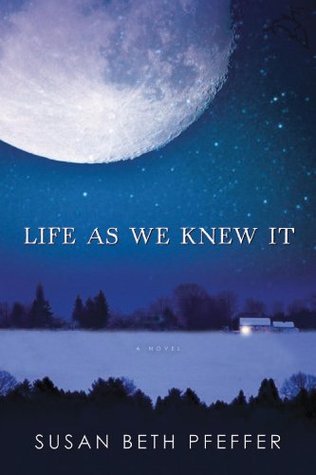
Life As We Knew It (Last Survivors, #1)

2. The world in Susan Beth Pfeffer's Life As We Knew It. I felt an incredible desire to stock up on canned foods after reading this book.
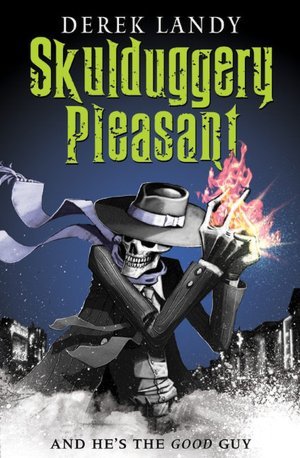
Skulduggery Pleasant (Skulduggery Pleasant, #1)

3. Much as I love these books, the world in Derek Landy's Skulduggery Pleasant series. Because honestly, I would be one of the pitiful mortals without magic who would probably get stuck in the middle of a vampire slaughter, wizard battle, or Faceless Ones attack. And I would have absolutely no idea what was going on.

Ready Player One

4. The world in Ernest Cline's Ready Player One. I would hate to live in a world where the only happy places were online, everyone interacted online for the most part, and 1980s pop culture knowledge was your ticket to popularity. Also the environment is pretty much dead.
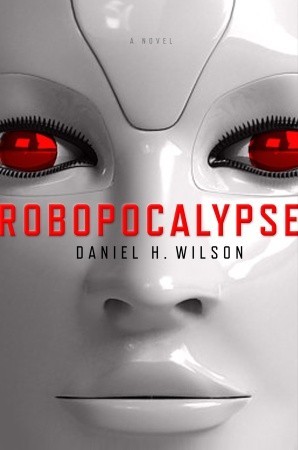
Robopocalypse

5. The world in Daniel H. Wilson's Robopocalypse. Because I would most likely die a painful, robot-induced death, and if not I would constantly be fearing for my life and would probably have lots of dead family and friends.
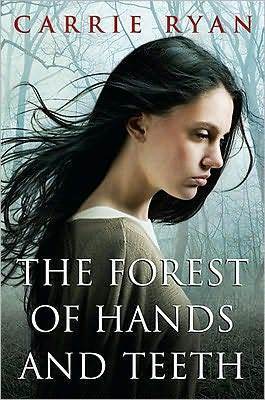
The Forest of Hands and Teeth (The Forest of Hands and Teeth, #1) 

6. The world in Carrie Ryan's The Forest of Hands and Teeth. The zombie apocalypse has already happened, and everyone who has survived lives in fenced-off compounds for their own safety. Unless the fence is breached, in which case GOOD LUCK. Zombies will want to eat you, and some of them are fast.
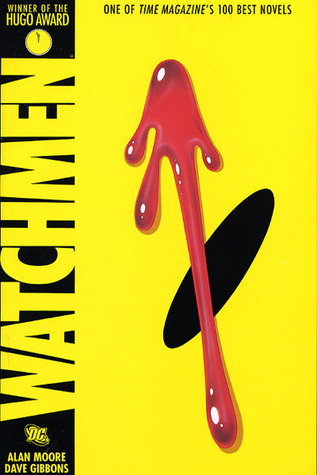
Watchmen 

7. The world in Alan Moore's Watchmen. To be fair I've only seen the movie and I know it's pretty different, but still. This alternate history sounds terrifying and I don't want any part of it.
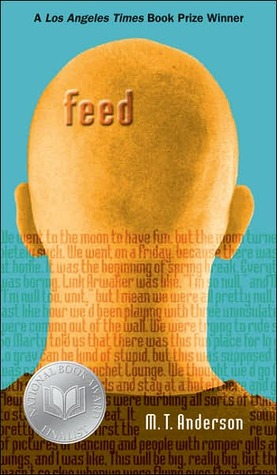
Feed

8. The world in M.T. Anderson's Feed. This is another futuristic look at the world, after technology has become such a large part of our lives that people have something called the Feed implanted into their brains and consumption is everyone's main concern. Which is too bad for the dying planet, and everyone's health. Think sores that get so big and gross they are hard to ignore, thus they become sort of a fashion accessory. NO THANKS.

I Am the Cheese 

9. Adam Farmer's world in Robert Cormier's I Am the Cheese. So technically this is not a dystopian world, but our own world through the eyes of a boy named Adam Farmer. I don't want to give away too much in case you haven't read it, but if you have you know what I'm talking about. Basically the thought of being in Adam's place makes me want to curl into the fetal position yelling PLEASE GOD NO.

The Knife of Never Letting Go (Chaos Walking, #1) 

10. The world in Patrick Ness's The Knife of Never Letting Go. I know I wouldn't even be there, because, no women. BUT if I were one of the guys in the settlement of Prentisstown on New World, I would break. No quiet ever, always hearing the Noise of everyone else's (dirty, perverted, violent, mournful) thoughts, not to mention the twitterings of any animals nearby. And oh yeah, everything else there sucks too. Being on New World would be the worst.

What are your top ten picks?

Friday, December 14, 2012

Audiobook review: "Safekeeping" by Karen Hesse

Title: Safekeeping
Author: Karen Hesse
Publisher: Macmillan Young Listeners, 2012 (print available from Feiwel and Friends)
Narrator: Jenna Lamia

It's an unspecified year sometime in the near future, and the American People's Party has taken over the US government. When the new president is assassinated, the government starts to take control of everyone, arresting any person who expresses some form of rebellion or disagreement with the government. When all this transpires, Radley is volunteering in an orphanage in Haiti, but despite everyone else's warnings she desperately wants to get home to her parents to make sure they're all right. And so begins her journey.

After no one arrives to pick her up at the airport, Radley must think of a plan b, and soon. She decides to walk home, and what would normally be a 2-hour journey becomes one that lasts for days. She arrives home, only to discover a house that look abandoned. Her only option seems to be what she promised she'd do if she came to trouble: head north to Canada.

Radley begins as a naive, spoiled girl, only because everything she's ever needed or wanted has been provided to her by her parents. I have to be honest, at first I was irritated by her constant refrain of how her parents usually took care of everything, but it quickly becomes clear that she is willing to do whatever it takes to survive.

Eventually Celia comes into the picture. She is a loner too, though she has a dog named Jerry Lee, and the two form a tenuous and wary bond when Radley nurses Celia back to health from a fever. The two begin traveling together, slowly becoming friends. I honestly wasn't a big fan of Celia, but I appreciated the extra character and how their friendship leads to both of their growth and sense of family.

This is a very quiet book, despite the occasional tense scene. It's not the page-turner dystopian novel we've all come to expect, but for a patient teen, or perhaps one who isn't ready for the more violent novels in the genre, it may be worth it. I will say that since I listened to this on audio, I was deprived of the photography in the print version. They come in a pdf on the last disc, but clearly it's not the same as seeing it as you read it.

Speaking of audio, I'm sorry to say I am not a fan of Jenna Lamia. Period. I'd previously listened to her narrate Linger by Maggie Stiefvater and didn't like her then either. That's not to say she doesn't do a good job narrrating; I just really don't like her voice. It's too high-pitched for my taste, making her sound much younger than she or her characters actually are. I found her voice for Celia especially grating, which may be part of the reason why I never really connected with her as a character. That said, it wasn't awful, and I listened to the whole thing without many problems.

I am glad I listened to this, as it's a quietly powerful story of survival and hope, but I have heard better productions.

Disclosure: I got this audiobook from the publisher in exchange for an honest review.

Friday, July 6, 2012

Review: "The Other Side of the Island" by Allegra Goodman

Title: The Other Side of the Island
Author: Allegra Goodman
Publisher: Razorbill, 2008

Honor, born in the eighteenth year of Enclosure, has just moved to Island 365 after living with her parents in the Northern Islands for most of her life. Now that they are under the watchful eye of Earth Mother and her Watchers, they cannot act as freely as they did when they were on their own, before they were found and brought to their new home. They can't sing out loud, they must follow the rules, they must stay away from the ocean, and they cannot own any books at home. They must not be Unpredictable. But the problem for Honor is her family is Unpredictable, and they are very different. Her parents have another child and refuse to give him back to the government, they sneak out at night and don't come back until morning. Honor and her friend Helix find out that bad things happen to people who don't fit. They disappear, and they never come back.

In a literary landscape full of dystopian literature, it's nice to come across a book with a more original premise that doesn't have a fated love story or love triangle. It's a disconcerting vision of the future that makes one uneasy, a world where climate change has destroyed much of the earth, leaving only islands dotted here and there across the oceans. Little details here and there show how much people are aware of nature and the earth, or seem to be aware of it, such as wearing sun hats and applying sunscreen. However, in this world, weather is supposedly controlled by Earth Mother, and Enclosure, which basically means a big dome encloses each island completely. The sky is covered by an overlay with a picture of a perfect sky or a moon with seven stars, depending on time of day.

Earth Mother is something like the Big Brother of George Orwell's 1984, always in control and watching, but never actually seen in the course of the book. More immediate villains are those who uphold Earth Mother's reign, such as Miss Blessing at Honor's school. The way they treat people is chilling, be they adult or child, man or woman. And the orderlies, people whose brains have basically been rewired to do exactly as they are instructed, do all the hard work around the island, all the landscaping, cleaning, cooking, transporting, etc. They sort of reminded me of the Avoxes in the Hunger Games trilogy, unable to speak and basically slaves to those in power.

One of the most important things Earth Mother does to take power from the citizens is taking away their memories, mostly those from their childhood, but more if you are particularly unruly. Think about losing all memories of who your parents are, how you grew up, learning only what you are told in school and not being allowed to question it, or even have the ability to question it if you can't remember otherwise. That was the scariest thing about this future to me.

I was not a big fan of the writing style. Sentences were short and simple for the most part. I didn't really like the terseness, but it didn't really take much away from the book as a whole. My biggest problem was the ending, which seemed to stop too soon, with an author's note that said she did it that way to leave it up to the reader's imagination what the outcome is. I know not all books end in neat little bows, and I don't like it when they do, but stopping mid-action makes me feel like it's something of a cop-out.

All in all, a fresh take on dystopian future that is worth reading in the sea of dystopias out there right now. It's a good read for middle grade readers and strong older elementary readers, and should appeal to boys as well as girls.

Disclosure: I got this book from the library.

Thursday, September 15, 2011

Review: "All These Things I've Done" by Gabrielle Zevin

Title: All These Things I've Done
Author: Gabrielle Zevin
Publisher: Macmillan Young Listeners, 2011
Narrator: Ilyana Kadushin

In 2083, chocolate and coffee are illegal substances. Manhattan is rife with crime, and speakeasies and black market trade are rampant. Sixteen-year-old Anya Balanchine is caught up right in the middle of everything, not because she happens to be alive in this time, but because her family owns the famous Balanchine Chocolate company, and because her father, now dead, was one of the most notorious crime bosses in the city.

Still, Anya tries her best to keep a low profile, since she doesn't want to bring attention to the fact that her bedridden elderly grandmother is their sole guardian, and her brother Leo is a bit mentally handicapped due to an accident when he was a boy. Unfortunately, when her ex-boyfriend is poisoned by chocolate that she gave him, she's all over the news and in a lot of trouble. It doesn't help that she starts a relationship with the district attorney's son. And all the while, she needs to maintain some sort of control of her brother and younger sister, Nattie, and keep them away from the influence of her mafia family.

The feel of this book is a mixture of dystopia and old-school gangster, what with the prohibition on chocolate and coffee. I never really read anything about organized crime, but I found the way Anya handles things and the way her family operates fascinating. She is incredibly cool-headed, and mostly seems completely in control, even when she's going crazy inside. I truly admired her character, and I loved how she took all of her father's words to heart. She was always recounting some piece of wisdom her father imparted when he was alive, and I actually found them to be truthful and/or valuable.

All of the characters are well-written, and I found myself caring for even the most dangerous characters. Except Gable; he's a jerkface.

The dystopian society itself is not too far off from where we could be headed. There is a water problem, but one not large enough to have water rationed—yet. It's just very expensive, sort of like gasoline today. And the illegal substances of our time parallel very well with the illegal substances of this world. Organized crime developed around the chocolate and coffee industries because of their illegality, and people get a "high" off both of them, much like drugs and alcohol today. Interestingly, alcohol is widely available for all ages here.

Zevin's language is, for lack of a better word, delicious. Something I want to sip slowly. I loved the atmosphere of her world.

As far as the audio version goes, Ilyana Kadushin does an excellent job. She sounds spot-on for Anya, not too old or young. Her voice is soothing with no annoying quirks that I find happens often in audiobooks. And, she does a great Russian accent for Anya's older family members. It's very easy to tell the difference between each character's dialogue.

I highly recommend the audio version of All These Things I've Done, and certainly recommend the book itself. I fully plan on reading the rest of the Birthright series when they are released.

Disclosure: Macmillan sent me a copy of this audiobook in exchange for an honest review.

Monday, May 23, 2011

Review: "Divergent" by Veronica Roth

Title: Divergent
Author: Veronica Roth
Publisher: Katherine Tegen Books (HarperTeen), 2011

In a futuristic Chicago, people belong to factions and exhibit the trait most valued by the one they belong to. Beatrice has just turned 16 and therefore must make a choice that will affect her life forever. Should she stay in the faction of Abnegation, where selflessness is valued, and where she has grown up and lives with her parents and brother? Or does she dare to abandon everything she knows for what she most desires? Once her choice is made, she plunges into an adventure she never imagined, not even after all the thinking she has done. And she has one very dangerous secret she must keep... if she wants to survive.

In the influx of dystopian novels out recently, it's hard for one to stand out from the crowd. Surprise! Yep, this is another very positive review of this book. Divergent succeeds in being original, suspenseful and completely enjoyable. In the world Roth has created, people are put into strict groups, which is not a new concept. What is new (at least to me) is the concept that the people of each group have ONE trait or quality that they value above all others (selflessness, peacefulness, courage, intelligence and honesty) and live their lives accordingly.

What I loved about this so much was that the characters aren't on a grand mission to overthrow their government or society or whatever because they recognize it's a flawed society or that they want to be FREE, dammit. No. I'm pretty tired of that, honestly. These characters all completely accept their lives and do the best they can in the world their given, which is what I would expect. Sure, things happen that show these flaws, but it's not like a light bulb ever goes on about how awful their world is. Only hints here and there. (This might change in the other books of the series, I don't know, but I liked that part of this volume.)

And speaking of characters, I loved how flawed they all are. No one is perfect, ever. In fact, I hated Tris, our narrator, a few times during my reading. But I was glad for it. Tris is often something of an anti-hero, though she shows some cojones quite often. I admired her and despised her, which makes a pretty good case for Roth's writing. And another awesome thing: There is some diversity in this cast of characters, hallelujah. What's interesting is people's skin color is not noticed so much as their way of dress, which indicates their faction. There is still prejudice in this world, just a different kind than we're used to.

Oh, did I mention I could barely put the book down for all the action and layers of mystery within the plot? Yeah, that was pretty great. This book has nearly 500 pages but I flew through it.

I am very impressed with Roth's debut, and I will most definitely be picking up the next book when it comes out (whenever that may be—soon please?).

Disclosure: This book was sent to me by the (very awesome) publisher.

Wednesday, April 20, 2011

Review: "Bumped" by Megan McCafferty

Title: Bumped
Author: Megan McCafferty
Publisher: HarperTeen, 2011

Note: This title will not be published until Apri 26, 2011.

Set in a very near future (2035), the world of Bumped by Megan McCafferty is a world where only teenagers can have babies because of a Virus that prohibits anyone over the age of 18 from conceiving. As a result, teenagers are not only needed but enthusiastically encouraged to have lots of sex and babies. In fact, it's common for teens to "go pro," or enter into contractual agreements with older couples who want children. Preteens and young girls buy FunBumps, or fake bellies. Teens have masSEX parties that are basically orgies in hopes that the girls will end up pregnant. Popular songs talk about sperminating etc. And there is a lot of language that we would mostly find gross, but are normal here.

The main plot is told alternately by Melody and Harmony, twin sisters who were separated at birth and recently reunited with each other. Melody grew up in the pregnancy-worshiping world, while Harmony grew up in a very strict and isolated Church community where early marriage and procreation are highly valued. Melody has signed a pregnancy contract and is waiting to be paired with someone to "bump" with (you figure out what that means), while Harmony wishes to convert her newfound sister and save her soul by stopping her from doing this. As might be expected, things don't go according to plan and there are a few major cases of mistaken identity.

A lot of people have been buzzing about Bumped in the blogging world. Most of the reviews I've seen so far are lukewarm at best, but I think McCafferty deserves more credit than she seems to be getting. I think she handles the satire very well. I've read about people being uncomfortable with the glorification of sex and pregnancy, but it's not that far off from what we're experiencing in our own society. Though it might not be with explicit sex, girls are certainly gaining knowledge of sexuality earlier and earlier. If you doubt this, just take a look at this Jezebel post about Kotex's new line of maxipads aimed at 8- to 12-year-olds. No joke.

I also wasn't as grossed out by all the semen and pregnancy puns and phrases thrown around in typical conversation. In fact, the language kept me engaged in the text. I doubt many teens will be too put off by it, either—it's just a part of this world that McCafferty has created. And it's beyond clear that McCafferty is in no way endorsing sex or teen pregnancy. This is a future in which a new way of living is forced upon everyone, but most especially teens and, in particular, teen girls. Yes, it's disgusting, but that's the point.

In any case, this was a short read with a lot to say. However I was not impressed with all of it. I could not believe that this was all taking place in 2035, a mere 24 years into the future. It was easier for me to ignore this detail while reading. I also was not a huge fan with how religion is treated in the book.

Perhaps the biggest question for me is this: How does the LGBTQ community fit into this society? I'm betting teens are not allowed to be in these relationships or to explore these possibilities in their lives. It's briefly touched upon, but only very briefly. I'm pretty sure this will be explored more fully in the sequel(s), but it was something I wondered about while reading.

Bumped is not going to be for everyone, but it's not without merit. I foresee a lot of challenges in this book's future because of its content; I'm sure it will be deemed "inappropriate" by many. But I think it's worth checking out. It will certainly be unlike any of the other futuristic (I blanche only slightly from calling this a dystopia) books popular at this point in time.

Disclosure: I received an e-galley of this via NetGalley.

Monday, January 17, 2011

Review: "Delirium" by Lauren Oliver

TitleDelirium
Author: Lauren Oliver
Publisher: HarperTeen, Feb. 1, 2011
Where I got it: I received this as an eGalley from NetGalley.

This book will be released by HarperTeen on February 1, 2011.

Imagine a world where the pain of remembrance and love does not exist. Heartbreak, romance and even simple love does not exist, cannot exist past your eighteenth birthday. At least, not since the cure. This is the world of Lauren Oliver's Delirium, a dystopia where love and hatred are replaced by indifference.

For 17-year-old Lena, this is the only world she has ever known. With a mother who killed herself because of the disease, she is extra careful to watch out for any of the signs of the illness—she is not her mother. But things change when she meets Alex, who seems so different from all the other cureds (or, those who have gone through the procedure to remove the ability to love from the brain). With her friend Hana, Lena begins to see that the government might not be telling them everything about the cure, how they operate, and about love.

Oliver has created a fairly original premise for a novel in Delirium. Love is a disease, and it must be eradicated for the sake of the human race. Yet as we read farther into the novel, we realize that the communities are all fairly closed off from each other. There is never any news from other states, or even other parts of Maine, where the book is set. It's just Portland, and that's all we or the characters know.

What is truly terrifying is how I see why love is considered a disease in this world. Each chapter begins with a quote from a government pamphlet or book, or a common rhyme that explains what the disease is, why it must be destroyed, and just other insights into this culture. Oliver does a wonderful job at listing the symptoms and phases of the disease (preoccupation, difficulty focusing; perspiration, sweaty palms; periods of despair, lethargy; obsessive thoughts and actions; pain in chest, throat and stomach; etc), making it sound as if it is, indeed, something to avoid at all costs, much like pneumonia or something. The worst outcome of the disease is death, as in the case of Lena's mother (suicide). Lena hears horror stories of people who have "contracted the deliria" and throwing themselves off buildings or dying in other horrible ways.

Lena herself is an interesting character to watch through the story. She is at first very careful with her activities, taking no risks, and her more outgoing, engaging friend Hana is much more fun to pay attention to. I kept on wondering what made Oliver choose Lena as her narrator, but after reading it I can see it was a very deliberate choice—we see how this world can be perceived as normal, and have the satisfaction of seeing Lena start to rebel as well.

As far as plot goes, I thought it started off a little slow. It was necessary for the exposition, but it just seemed a little languid for a while, which isn't necessarily a bad thing; it contributed to the tone. Plus, as always, Oliver's prose is something to be savored. Lovely and flowing, it is one of the novel's greatest achievements.

I am looking forward to the sequel, as the ending was a wicked cliffhanger.

Sunday, January 2, 2011

Review: "The Ask and the Answer" by Patrick Ness

Title: The Ask and the Answer (Chaos Walking Book Two)
Author: Patrick Ness
Publisher: Candlewick Press, 2009
Where I got it: My library.

**Spoilers for The Knife of Never Letting Go**

After a terribly hangy cliffhanger, Ness continues the story of Todd and Viola on New World, this time as they process their new surroundings and situation in the colony of New Prentisstown, under the direction of Mayor (now President) Prentiss. Kept separate by the new regime, Todd and Viola both narrate their own stories and experiences; Todd as a prisoner and then worker under Mayor Prentiss, and Viola in the healing house under the formidable and strong Mistress Coyle. Things aren't as terrible as they feared at first, but as time goes by they both notice things that aren't humane or right. It doesn't take long before they must choose what side to support, whether they agree with everything going on or not.

This second installment of the Chaos Walking trilogy is no disappointment. Though not as heart-poundingly intense as the first, it is still chock-full of tension and twists that I wasn't expecting. Ness is more subtle in this one, and that's not a bad thing.

Though the plot certainly kept me turning the pages, this is very character-driven as well. We see a lot of development in certain characters, especially Davy Prentiss, that I never would have imagined after reading the first book. There is also a little development in Todd and Viola's relationship, despite the fact that they are separated for most of the book.

The way Ness portrays the Mayor is truly terrifying. An ally, or a foe? He is alternately kind and maniacal, and I was never quite sure which way it would go; I always wanted to believe everything he stood for is evil, but Ness wrote him in such a way as to confuse me enough to wonder. Mistress Coyle is similarly handled. I was never sure if I should trust her motives or not. For those of you who read Mockingjay, I was reminded of Snow and Coin by these characters, respectively. I'm not saying they're the same by the way, I'm just saying that these two characters put me in mind of those two.

It was interesting to hear Viola's point of view in this book. Part of why I loved The Knife of Never Letting Go so much was Todd's voice and the way Ness wrote him and his vernacular. That was lost when Viola narrated, as she is from a more educated background than Todd, and she has no Noise. Todd's stream-of-consciousness style is still beautifully written here, but I missed it when I read Viola's portions. That said, I am glad we get to hear her story as well.

Ultimately this is a story about the cause, effect and practice of warfare. Ness goes into the decisions made during war, and the ethics involved on both sides, yet he is not black and white about it. There is some very philosophical debate within the pages, and it will certainly raise some discussion questions if you read this for a book club or in a class.

And the ending? Be prepared for another massive cliffhanger. I think I'll take my time before reading the third book (which I have taken out of my library already), just to recover a bit from this one, but I fully intend to find out what happens.

Wednesday, October 20, 2010

Review: "The Knife of Never Letting Go" by Patrick Ness

The Knife of Never Letting Go: Chaos Walking: Book OneTitle: The Knife of Never Letting Go
Author: Patrick Ness
Publisher: Candlewick Press, 2008
Where I got it: The library, yo.

*Starred Review*

In an unspecified year in the future on an unspecified planet that is not Earth, there is a virus that broadcasts a man's thoughts to all nearby; this is called Noise. It is in this strange new place where no thoughts are secret that we meet Todd Hewitt— he is almost 13 years old, the time a boy becomes a man according to the laws of Prentisstown, his settlement on New World. But one day he finds a bubble where there is no Noise, but a silence so palpable he can feel it. His discovery leads him to flee Prentisstown and the only life he has known, to he knows not where. And he begins to see that not all he has been told his whole life is the truth—Prentisstown has some deep, dark secrets that could spell the end.

Ness has created a wholly original world with a premise full of promise and potential, both of which he fully meets. The action and suspense starts from nearly the beginning, and it is hard to put down from that moment on. There are always new discoveries and revelations that are waiting to be found—what is the secret history of Prentisstown? Why do Todd's caretakers refuse to tell him what is going on? What are all of these creatures and events that Todd refers to? I was compelled to keep reading so I could find these answers.

The style of the writing is superb. It is written completely in vernacular, though it is Todd's language and not our own. Ness perfectly captures the accents with the spelling of the words, making it easy to hear what Todd and the various other characters sound like. He also often writes in run-on sentences that perfectly capture what Todd's Noise sounds like to those nearby who can hear him, making it seem as if we are listening to his thoughts and Noise instead of reading his memoir. It is completely in the moment, and we are there with him.

Manchee, Todd's dog, is also a wonderful character. On New World, the animals can talk and Manchee is exactly as you would expect a dog to sound. It reminded me of Doug from the movie Up; short sentences, mostly just single words to express what he wants Todd to know. Though Todd is reluctant to accept responsibility for him at the beginning, Manchee is incredibly loyal and becomes much more than just a dog to Todd.

Not only is this a fantastic adventure story, it is a terrifying dystopia with many messages slipped in about war, post-Colonialism, gender roles and ethical decisions. The knife referred to in the title becomes something of a symbol throughout the course of the book, as well as an integral piece of the story. It is the one thing Todd is constantly aware of, the one thing for which he knows the location at all times. This will generate a lot of discussion about all of the above, especially in this, a time when war is constantly on the news. What is right? What can Todd do to counter all the evil that surrounds him?

I highly recommend this to everyone who likes action, science fiction, dystopian fiction, and coming-of-age novels. This is an especially great series for readers who liked The Hunger Games and the other books in that series—many of the same themes and issues are addressed, but in a better story with a better execution, in my opinion.

Tuesday, October 19, 2010

Review: "Feed" by M.T. Anderson

FeedTitle: Feed
Author: M.T. Anderson
Publisher: Candlewick Press, 2002
Where I got it: I listened to the audio version and got it from the library.

Titus lives in a future where everything is connected with and through the feed. The feed is how people chat, buy, browse, research, and select—it is a computer built into the brain, an implant that not only allows you to have what we would cal the Internet in your head, but also TV shows and commercials, suggestions as to what you might like based on past purchases or inquiries, and anything else along those lines. Titus is just another teenager who has grown up with the feed as something normal, and he lives to bask in the corporate-controlled world. But this all changes when he meets Violet, an unconventional girl who has some weird ideas and perspectives on the feed and the world they live in.

You know you've found a great dystopian/science fiction book when it makes you grateful for the life you have. You also know it's even better if it makes you look at our world and get a little panicky. Titus sounds like many teens in today's world, dependent on the feed for everything he is capable of doing. He also recognizes the dangers of leaving the world's fate on the whims of the corporations that control practically everything, yet sees it more as an inevitability than as something to fight against. That hits really close to home; so many people in our world, sometimes myself included, see what goes on as impossible to change or have an effect on.

Anderson creates such a believable world, and such a terrifying one. The people are completely at the mercy of the corporations—even School™ is a corporation, and not government-run (Titus is appalled at the idea of a government-run school, saying it's "completely, like, Nazi"(109)). They all embrace the instant gratification the feed provides; the instant chatting, the instant purchasing, the instant information—and all this is reminiscent of how we're all plugged in to the Internet at all times. Yet Anderson doesn't come off as being anti-progress or anti-Internet; it's just the way it is, and that's what makes it so scary.

There are also an infinite number of environmental problems that lead the reader to the conclusion that the world will soon end. People start to get lesions, which are of course turned into a fashion statement to deflect the attention from what is causing them, and there are no more trees or natural anythings. Forests are completely gone, as is wildlife. Violet says that the earth is dead; there is nothing that mankind hasn't created or planted, nothing straight from the earth. Everything has been destroyed.

The characters were all really well-formed and rounded, even the stock characters. Titus is not a hero by any means—he thinks more than the average teen in his world, but he wants to belong and be normal and so doesn't talk about his thoughts to his friends as he does to us, the readers. He is often a major jerk to Violet, but shows brief glimpses of a deeper character. I was surprised to see his friends showing sides that I wouldn't have expected from them, especially the completely superficial and unoriginal Quendy when she is talking to Titus about Violet—she shows real compassion and insight, kind of giving Titus a swift kick in the butt. All the teens show some bits of intelligence and occasionally a rare bit of individuality, though it gets harder and harder for them to do so as the feed steers them toward the latest trends and hot topics.

Though this comes before the dystopian trend that has been so prevalent in young adult literature as of late, it is an important contribution to the genre. Science fiction at its core, this is also a statement about our world and where we might be headed. It's protagonist is not extraordinary, though he meets an extraordinary girl. His thoughts are mostly wired into the feed and what it wants him to think, with just a little room for independent thought.

Also, just a warning: the language was pretty strong in this, so it might be better-suited to older readers.

Note on the audio version: This was narrated by David Aaron Baker, and he did a great job. His voice for Titus was perfect, and he was able to make most of the characters' voices unique. Unfortunately I didn't really like his voice for Violet, which was softer—I thought of her as having a more sassy kind of voice. But other than that, his acting was superb. I would also recommend this for its ensemble cast in the feed commercials—with added music, they sounded like ads we see and hear every day. This actually made me panic a little, especially when I saw three commercials in a row that sounded straight from Titus's world. I give the audio 4 out of 5 stars.

Thursday, September 30, 2010

Throwback Thursday: "The Giver" by Lois Lowry


It's been a while, Throwback Thursday fans! I've been meaning to do this book for a while, but hadn't gotten around to it. Lucky for me Banned Books Week is a perfect time to revisit a childhood favorite and a classic young adult book. Today we revisit The Giver by Lois Lowry, Newbery Winner and my very first dystopian book (or did I read Fahrenheit 451 first?). The first time I read this book was in the 8th grade. We were reading it in class, and like a couple other books that year (including Fahrenheit 451, actually), we didn't finish the reading in class. Well, this wouldn't do. I had to know how it ended! And so I did what any book lover would: I "borrowed" it from my classroom and brought it home with me. I brought it back, don't worry! I just wanted to finish it. Then I had to have a copy for myself, and of course bought one. So without further ado, here it is!


The GiverTitle: The Giver

Author: Lois Lowry
Publisher: Bantam Books, 1993
Where I got it: I bought myself a copy from Barnes & Noble.

Jonas lives in a perfect world. Everyone is the same: families are assigned to each other (four in each, a mother, father, son and daughter), everyone gets the same privileges at particular ages, everyone lives in the same houses, everyone is assigned a job. There is no color. And people don't die until they are supposed to, with rare exceptions. With this "sameness" in their society, the result is a world with no emotions.

When Jonas turns 12 and he is assigned his position, he is surprised. He will be the new Receiver of Memory, a mysterious position that he doesn't know much about. He meets the old Receiver, now known as the Giver, who begins to show him the true joys, and with this comes the true pains, of life that his community has lost. He keeps these experiential memories as a burden so the others don't have to experience them. But when Jonas' father, who works at the birthing center, brings home a child named Gabriel who is taking a bit too long to develop, Jonas realizes he must make a choice, one that could condemn him and Gabriel to an unknown fate.

Lowry gives us the classic dystopia here, but disguises it in the form of a utopia. There is no pain in this world, no worries or fears. But this means there is no true joy, happiness or love. Family and love are only ideas, concepts that the people of this community know about but don't understand. Jonas is given the responsibility that no 12-year-old should have to have; being the Atlas of his community, holding each memory, good and bad, that they are no longer privileged to have, and not tell others what they are missing in life.

Despite the community having no problems or pain, there are some things clearly wrong with the society, horrifying things that Jonas finds out through the course of the book. There is no such thing as a completely perfect society, since problems and the unexpected crop up no matter how much you plan. And these problems and unexpected occurrences need to be fixed.

There is not a whole lot to say about most of the characters, since they largely have no personalities. They all have their own preferences, yes, but the needs and desires of the society are stronger and unquestioned. The only characters who are really worth taking a look at are Jonas and the Giver. Jonas is an inquisitive boy who doesn't completely bend to the will of the community like his peers, which perhaps singles him out for the job of the Receiver. He has a clear sense of right and wrong, even though he is not taught this. He is also brave in his departure from the normal, showing remarkable courage in the face of adversity and possibly death.

The Giver is a wise old man. He is the only one who knows true pain and loss, and has also felt true love and devotion. We learn of a previous Receiver who he attempted to pass on the memories to, and what happened to her. He has had his heart broken more than once by his memories and by the things he has had to endure, being the only person who truly remembers the way it once was. He gives Jonas all of the courage and support he can when it is necessary.

**POSSIBLE SPOILERS**

Again, Banned Books Week. This book has been banned many times over the years because of the society's use of euthanasia and suicide to help create this perfect community. Death is painless, but once you reach a certain age, that's it. You are done and need to be "released." Most of the elderly are happy to go, but there are some people (not necessarily elderly) who are taken unwillingly. And those banning this for these reasons are simply missing the point of the book. This is a society we clearly don't want to be a part of. Choice is taken away completely (kind of like the world book banners are trying to create—they take away our choice to read). Yes, there are attractive aspects of this society, but they are largely outweighed by the subtle horrors that are hidden from plain view. I'm also pretty sure I've read somewhere (can't remember where) that it has been banned for its positive portrayal of a communist society, which is just plain silly.

Monday, September 6, 2010

Review: "Incarceron" by Catherine Fisher

Incarceron (Incarceron, Book 1)

TitleIncarceron

Author: Catherine Fisher
Publisher: Dial, 2010
Where I got it: I borrowed it from the library.
Why I read it: I like reading the new dystopian stuff, and this was new and dystopian. Plus I had the time to read it.

Here, there are two worlds. There is the Outside, where the people are slaves to Protocol—sticking to the technology and practices of an Era of old, of what seem to be Medieval times. And the other is Inside—within the living walls of Incarceron. Incarceron is a prison that lives and thinks, watching the thousands upon thousands of prisoners it traps inside.

One of these prisoners is Finn, a young man who believes he is different—from the Outside. And when he comes across a mysterious Key with the same insignia that's tattooed on his wrist, he is more sure than ever.

Claudia is the daughter of the Warden of Incarceron, due to be married off to the Prince of the realm. But she will do whatever it takes to escape this fate.

When these two characters come together through a variety of unexpected (on their part) occurrences, they try to hatch a plan to help each other get what they want.

I thought this book was okay. It wasn't outstanding, but it wasn't bad. I liked the ideas, the dystopia of Incarceron and Protocol, but I felt there could have been more development on all counts. None of the characters were very relatable/likable, though some were not as bad as others. A lot of them seemed just a little too flat and/or wooden, while Claudia is usually just plain irritating. She's a somewhat strong heroine, but I didn't particularly like her. The really cool thing about this was that Incarceron is a character in itself; the constantly changing, moving, living organism that contains all its prisoners, some of which are created from its own walls.


I did like the (sparse) plot development of Sapphique, a legendary character who was said to have escaped Incarceron, but not much is revealed in this first book. I would have liked to learn more about him.

There weren't many plot twists that I didn't see coming. It was actually pretty predictable to a point, though there were a few exceptions. Some things were definitely left murky, leaving it open for the sequel, Sapphique. Unfortunately, it's not a particularly memorable novel, so if you read it now and wait for the sequel, you might forget certain plot elements, like I probably will. If you like dystopian YA, I'm not going to say it's a must-read, but it's not a complete waste of time either. If you're interested, it's worth picking up so you can come to your own conclusion.

Thursday, August 26, 2010

"Mockingjay" by Suzanne Collins

Mockingjay (The Final Book of The Hunger Games)Title: Mockingjay
Author: Suzanne Collins
Publisher: Scholastic, 2010
Where I got it: I borrowed a loaner nook from work (we can do that—more perks to being a bookseller) and I downloaded it onto there. So, e-book.

If you've never heard of this series, and haven't heard anything about the anticipation for this book, you don't pay attention to the book industry. This has been one of the most eagerly awaited books of the year, probably right behind Steig Larsson's The Girl Who Kicked the Hornet's Nest. Long story short, everyone who keeps up with YA has read, is reading, or is planning to read this last book in Suzanne Collins' bestselling series.

I promise I will not give out any spoilers without making it completely obvious beforehand, but I do think you might be wondering why I am only giving it three stars.

But first: plot summary. By the way, **POSSIBLE SPOILERS FOR FIRST TWO BOOKS IN SERIES**. Katniss Everdeen, after being taken out of the custody of the Capitol, is taken to District 13, long believed to be obliterated. What she finds is a strictly organized society and rebel movement. Now the face of the cause, Katniss is the one crucial element the rebels and rebel leaders need for their plan in a Capitol takedown. Katniss needs to figure out where she stands, on all counts.

**END OF SPOILERS**

I think part of the reason I didn't particularly care for this one was the buildup and the hype surrounding the entire series. Yes, it is provocative and addictive, violent and slightly philosophical, but I was never really wowed by anything. There was way too much explanation in the beginning; all exposition, barely any showing as opposed to telling. It fell a little flat for my tastes, and despite the constant action I rarely felt energized. I wasn't attached to any of the new characters introduced, and I slowly stopped caring about a lot of the old characters too, which is never good.

I also thought it got way too preachy at the end. There was absolutely no subtlety; everything was spelled out in black and white, kind of like this comic by Kate Beaton. We understand, it's bad to kill children. You don't need to tell us fifty times in a few different ways.


As for the ending, well, I won't say much, but it's lackluster. I felt it climaxed too soon, and Collins was scrambling to tie up loose ends toward the end. I'm satisfied, but feel like it could have been more. Like most of the book, it fell short.

Now after all this criticism, don't think I hated it. No, I liked it well enough; there were certainly points where I couldn't put it down, one of which almost made me late for work today. If there's one thing Collins knows how to do, it's create suspense. She likes to end her chapters on crazy things that happen out of nowhere, forcing you to turn the page in order to find out how the heck they're going to handle each disaster.

I'm sorry to those of you who are offended by my less-than-stellar review, but I just don't think this book is as great as it's made out to be. It's certainly a worthwhile, thought-provoking and discussion-generating read, but it's not the best book I've read this year. Let's just say that if you had to pick one book to read this year, I'd suggest you not pick this one.

What do you think? Was I unfair, or do you agree?
Related Posts with Thumbnails